Blueprint Printers: A Complete Guide for Architects, Engineers, and Builders
| Quick Answer | A blueprint printer is a large-format printer built for the line accuracy, scale, and durability that CAD drawings and construction plans require — not the same thing as a general wide-format printer used for posters or signage. Entry-level models run $3,000–$8,000, mid-range $8,000–$20,000, and high-volume production units $20,000+. Most Colorado AEC firms do better leasing with a bundled service agreement than buying outright, since a plotter down on bid day costs more than the lease payment. ABT is an authorized dealer for Canon, HP, Epson, and Kyocera/KIP with local service in Denver, Colorado Springs, and Westminster. |
What Is a Blueprint Printer |
Why It’s Essential |
Key Features |
Recommended Printers for 2026 |
Cost Breakdown |
Who Uses These |
Maintenance |
FAQ
Blueprints are the backbone of design and construction. They guide contractors, inform clients, and serve as the official documentation for permits and approvals. To keep these vital documents accurate and accessible, you need more than a typical office device — you need a blueprint printer built for precision, scale, and efficiency.
This in-depth guide explains what blueprint printers are, why they matter, how to choose one, and which models are worth considering in 2026.
What Is a Blueprint Printer?
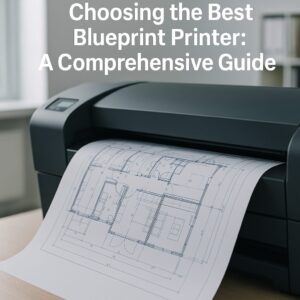
A blueprint printer is a specialized large-format printer designed for technical drawings, CAD files, and construction plans. Unlike general wide-format printers used for posters or signage, blueprint printers prioritize:
- Line Accuracy – Crisp, precise output for schematics, layers, and annotations.
- Large Scale – The ability to print oversized sheets for full plan sets.
- Durability – Prints that withstand repeated handling, folding, and jobsite wear.
- Fast Turnaround – Quick processing to keep projects on schedule.
The result is a machine that ensures professionals can trust the documents they depend on daily.
Why a Blueprint Printer Is Essential
|
Precision Saves Time and Money A single misread line on a drawing can delay projects, create rework, or increase costs. Blueprint printers produce highly accurate documents, reducing errors in the field. |
Consistency Across Sets Most projects involve multiple plan sets and revisions. With a dedicated blueprint printer, every copy matches the original, avoiding confusion. |
|
Faster Project Delivery Time is money in construction. Printers designed for technical drawings output revisions quickly, keeping teams updated with the most recent information. |
Adaptable Media Options From bond paper for office sets to waterproof synthetic sheets for outdoor use, blueprint printers give you flexibility for any situation. |
Key Features to Consider
Before making a purchase, compare features that will directly impact your workflow:
- Print Width – Choose a model that supports your typical sheet sizes (common are 24″, 36″, 44″, and 60″+).
- Resolution & Accuracy – Look for fine-line precision and high DPI for technical detail.
- Print Speed – High-volume firms should prioritize pages-per-minute or feet-per-minute ratings.
- Ink or Toner Technology – Dye, pigment, toner, or UV inks affect durability and cost.
- Media Handling – Dual-roll feeds, auto cutters, and smart switching improve efficiency.
- Color Options – Even if most plans are monochrome, color overlays for maps or highlights can add value.
- Software Integration – CAD compatibility and seamless PDF workflows keep things efficient. In 2026, look for cloud-native job submission and Revit/BIM 360 integration.
- Service & Support – Local technician access is crucial for minimizing downtime.
| Get a Free Print Environment Assessment → Not sure which feature set actually matters for your volume? ABT will walk your current workflow and tell you straight. |
Recommended Blueprint Printers for 2026
Choosing the right model depends on your output needs, budget, and business growth. Here are trusted options across different categories:
Entry-Level Options (Small Firms or Low Volume)
- 36-inch capacity, excellent for CAD drawings and technical plans
- Compact, quiet design suited for small offices
- Affordable running costs with consistent, high-quality results
- Current-generation model with cloud job submission — replaces the now-discontinued TM-355
- 36-inch printer optimized for CAD and line drawings
- Simple interface, reliable for small to medium teams
- HP Smart app integration for mobile and remote printing
- Balanced cost and performance for growing practices
Mid-Range Solutions (Busy Offices)
- 36-inch printer designed for speed and reliability
- Dual-roll system for continuous output with fewer interruptions
- Excellent choice for firms with frequent revisions and tight deadlines
- Strong network security features — important for sensitive project files
HP DesignJet T2600 PostScript MFP
- Multifunction device: print, scan, and copy in one footprint
- Touchscreen interface built for team collaboration and job queuing
- Handles both monochrome plan sets and color overlays with precision
- Scan-to-cloud workflows for archiving as-builts and markups
High-Volume & Production Models (Large Firms or Construction Sites)
Epson SureColor T7770D
- 44-inch dual-roll design with automatic media switching
- Ultra-fast print speeds for both technical and graphic output
- Ideal for firms balancing blueprint production and presentation work
- Heat-Free technology reduces energy use and maintenance intervals
KIP 900 Series (a Kyocera company)
- Rugged, toner-based system built for continuous, high-duty-cycle output
- Purpose-built for high-volume monochrome AEC and reprographics environments
- Ideal for construction companies managing daily plan-set output at scale
- Predictable maintenance schedule — a strong fit for managed print programs
Cost Breakdown
When evaluating a blueprint printer, consider both the purchase price and long-term operating expenses.
|
Entry-Level $3K–$8K |
Mid-Range $8K–$20K |
High-Volume $20K+ |
Ongoing Costs Include:
- Ink or toner refills
- Specialty media (bond, vellum, synthetic, film)
- Preventative maintenance
- Replacement parts
- Service contracts
Buying based on initial cost alone can be misleading. A slightly higher upfront investment may lower operating costs and downtime, delivering better ROI over time. Most Colorado AEC firms find that leasing — with a bundled service agreement — is the most predictable way to manage total print cost. For exact price ranges by brand and tier, see How Much Should You Pay for a Plotter or Wide-Format Printer?
Who Uses Blueprint Printers?
Blueprint printers serve a wide range of industries where precision and scale are non-negotiable:
- Architects – Producing design sets and construction documentation.
- Engineers – Printing schematics, MEP layouts, and technical diagrams.
- Construction Firms – Managing job site revisions and as-builts.
- Surveyors and Planners – Preparing topographical maps and site drawings.
- Government Agencies – Reviewing permit applications and public works projects.
- Universities – Supporting design, engineering, and architecture programs.
Maintenance and Longevity
To maximize the lifespan of your blueprint printer:
- Schedule Regular Cleaning – Dust and debris affect print quality and reliability.
- Use Quality Consumables – Low-grade ink or paper can cause clogging or jams.
- Keep Software Updated – Firmware and driver updates improve performance and security. In 2026, many manufacturers are pushing security patches specifically for network-connected wide-format devices — don’t skip these.
- Train Staff – Proper usage reduces misprints and extends machine life.
- Plan Service Intervals – Regular checkups prevent costly breakdowns.
Well-maintained devices can serve firms for five years or more, making them a smart long-term investment.
Best Practices for Selecting the Right Printer
- Evaluate Your Print Volume – Estimate how many sheets you’ll need per week or month.
- Test Before You Buy – Request sample prints using your actual files.
- Check Office Space – Ensure the printer fits comfortably in your office or site environment.
- Factor in Service Response Times – A great printer isn’t useful if you’re waiting days for repairs. ABT serves all three Front Range locations with same-day and next-business-day response.
- Plan for Growth – Anticipate future workload so you don’t outgrow your printer too quickly.
Long-Term ROI of Blueprint Printers
Beyond the immediate benefits of clarity and speed, blueprint printers deliver significant return on investment by:
- Reducing reliance on outsourced print shops
- Cutting turnaround times for revisions
- Improving team collaboration with quick, accurate updates
- Minimizing costly construction errors tied to unclear documents
For many firms, the savings from bringing blueprint printing in-house offset the investment within the first 12–18 months.
Related Guides
→ Best Plotters for AEC Firms in Colorado — 2026 Guide — device-by-device recommendations, lease-vs-buy math, and the 2026 Section 179 tax angle in more depth than covered here.
→ Roland vs Canon vs HP: Which Wide-Format Printer Wins in 2026? — if you’re weighing signage, wraps, or fine art output rather than blueprints specifically.
→ How Much Should You Pay for a Plotter or Wide-Format Printer? — exact price ranges by brand and tier.
| Get Started Today → Or call 303-778-0600 — local technicians, not a call center. |
Frequently Asked Questions
What’s the difference between a blueprint printer and a general wide-format printer?
A blueprint printer is optimized specifically for line accuracy, technical drawing detail, and durability under jobsite handling. General wide-format printers (used for posters, signage, or fine art) prioritize color vibrancy and image quality over line precision — the wrong tool can still print a blueprint, just not as reliably at scale.
What size blueprint printer do I need?
Most firms printing standard D/A1 construction sets do well with a 24″–36″ device. Go 44″ or wider only if you regularly print full site plans or oversized presentation boards.
Should I buy or lease a blueprint printer?
Most Colorado AEC firms come out ahead leasing with a bundled service agreement — it lowers upfront cost, protects against downtime, and makes upgrading easier as print technology improves. Buying makes more sense with stable, predictable volume and a 7+ year ownership horizon.
How much does a blueprint printer cost?
Entry-level models run $3,000–$8,000, mid-range $8,000–$20,000, and high-volume production units $20,000+. Ongoing costs — ink or toner, specialty media, maintenance, and service contracts — matter as much as the sticker price over the device’s life.
How often should I replace a blueprint printer?
Well-maintained devices typically serve firms for five years or more. If you’re leasing, a 3–5 year refresh cycle is standard as speed, connectivity, and security features improve.
Does ABT service blueprint printers outside Denver?
Yes. ABT operates from three Front Range locations — Denver/Centennial, Colorado Springs, and Westminster/NoCo — with same-day and next-business-day service response across the corridor.
|
WC
|
Wendy Campbell Director of Marketing · Automated Business Technologies Wendy leads digital marketing and content strategy for ABT, a Colorado-owned authorized dealer for Canon, HP, Epson, Kyocera/KIP, Xerox, Fujifilm, and Roland, serving AEC firms and businesses across the Front Range from three local offices since 2005. |