What Are Cloud Communications & UCaaS? A Plain-English Guide for Colorado Businesses
By Wendy Campbell, Director of Marketing | ABT | Updated 2026 | 8-minute read
In This Guide:
If you’re researching cloud communications & UCaaS for your Colorado business, you’re in the right place. This guide breaks down what Unified Communications as a Service (UCaaS) actually is, how it compares to the phone systems most businesses are still running, and what to look for when it’s time to make the switch. Whether you’re managing 10 employees or 200, upgrading your business communications platform is one of the highest-impact technology decisions you’ll make this year.
Ready to skip the research? ABT’s communications specialists serve the entire Front Range — Denver, Colorado Springs, and Westminster. Schedule a free 15-minute systems review → [UNVERIFIED — confirm URL before publishing]
What Is UCaaS?
Quick Answer: UCaaS (Unified Communications as a Service) is a cloud-hosted platform that combines voice calls, video conferencing, team messaging, and file sharing into one system — replacing traditional on-premise phone systems and reducing the need for separate tools.
Unified Communications as a Service (UCaaS) is a cloud-based solution that consolidates your business’s communication and collaboration tools into a single, integrated platform. Instead of managing a separate phone system, a video conferencing subscription, a chat tool, and a voicemail server — all of which need maintenance, licensing, and IT support — UCaaS combines them into one platform accessible from any device, anywhere.
UCaaS is highly sought after for its ability to streamline operations. Typical capabilities include voice and VoIP calling, video meetings, team messaging, file sharing, contact center features, and integrations with CRM and productivity tools.
Because the platform lives in the cloud, businesses don’t need to invest in on-site hardware or manage software updates. The provider handles infrastructure, security patches, and uptime — your team just uses the tools.
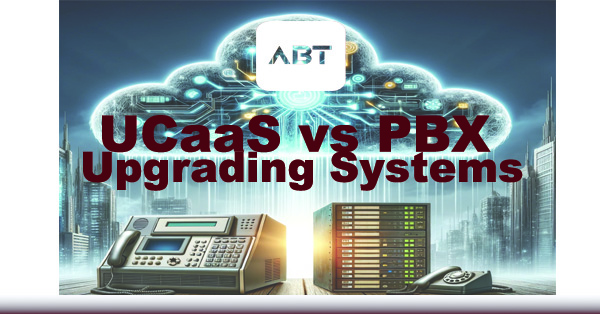
UCaaS vs. Traditional PBX: What’s the Difference?
Most Colorado businesses still running a traditional phone system are using a PBX — a Private Branch Exchange. This is the physical hardware box (often in a server room or closet) that routes calls between extensions and connects to phone lines. PBX systems were the standard for decades. They’re also increasingly a liability.
| Feature | Traditional PBX | UCaaS / Cloud Phone |
|---|---|---|
| Setup | On-site hardware; days to install | Cloud-based; hours to deploy |
| Upfront Cost | High (hardware + installation) | Low to none; monthly per-user fee |
| Remote Work | Poor; tied to office location | Full-featured from any device |
| Scalability | Add lines = add hardware | Add users in minutes |
| Maintenance | Your IT team or vendor | Managed by provider |
| Video & Messaging | Requires separate tools | Built in |
| Security Updates | Manual; often delayed | Automatic; provider-managed |
UCaaS offers businesses a more flexible, scalable, and cost-effective communication solution compared to traditional PBX systems. By unifying voice, video, messaging, and collaboration tools in the cloud, UCaaS enables seamless connectivity from anywhere — an essential feature for Colorado’s growing remote and hybrid workforce.
Key Benefits of Cloud Communications for Your Business
Cloud communications offer businesses significant advantages that go well beyond cost savings. Here’s what Colorado businesses consistently cite as the highest-value benefits after making the switch:
|
Scalability Without Hardware Add or remove users in minutes. No hardware procurement, no installation fees. Whether you’re onboarding five new employees or opening a second location, UCaaS scales with your business — not against it. |
Lower Total Cost of Ownership Eliminate hardware maintenance, reduce IT overhead, and consolidate multiple subscription tools into one monthly per-user fee. Most businesses recoup the migration cost within 12–18 months. |
|
Remote & Hybrid Work Ready Your team gets the same full-featured phone system whether they’re at the Denver office, working from home in Fort Collins, or traveling. Mobile apps make the desk phone optional. |
Built-In Security & Compliance Enterprise-grade encryption, automatic security patches, and compliance features (HIPAA, SOC 2) managed by the provider — not your IT team’s weekend project. |
|
CRM & App Integration Connect your phone system to Salesforce, HubSpot, Microsoft 365, or Google Workspace. Calls log automatically, contacts pop on incoming calls, and your team works smarter with less toggling. |
Analytics & Reporting Real-time dashboards show call volume, hold times, team availability, and customer wait patterns. Data your old PBX never captured — and insights that directly improve service quality. |
Why Upgrade Your Business Phone System Now?
The business case for upgrading has never been stronger — and the cost of waiting has never been higher. Here’s what’s driving the urgency for Colorado businesses in particular:
The Remote & Hybrid Work Shift Is Permanent
Colorado’s tech-forward business community adopted hybrid work faster than most markets. Traditional phone systems weren’t built for distributed teams. If your employees are regularly working from home but relying on forwarded calls or personal cell phones, you’re already experiencing the productivity cost of an outdated system.
Cybersecurity Risk Is Rising
Legacy phone infrastructure is increasingly a security liability. VoIP fraud, toll fraud, and unencrypted call interception are real and growing threats. Modern UCaaS platforms include encryption, multi-factor authentication, and automatic patching — security your PBX physically cannot provide.
The Cost of Inaction Compounds
Every month you pay for aging hardware maintenance, separate video conferencing subscriptions, and a phone system that requires an on-site vendor call to add a line is a month you’re overpaying. Modern cloud communications platforms consolidate these costs — typically at a lower total monthly spend.
See how cloud communications compares in practice:
Thinking about making the switch?
ABT’s communications team has helped hundreds of Colorado businesses migrate to cloud phone systems with zero downtime. We handle the setup, training, and ongoing support — you just get a better phone system.
What to Look for in a UCaaS Provider
Not all UCaaS platforms are equal, and not all vendors provide the same level of local support. When evaluating providers — whether you’re comparing RingCentral [UNVERIFIED URL — confirm before publishing], Crexendo, or another platform — here’s what actually matters for a Colorado business:
| Local Support | Does the vendor have local technicians who can be on-site if needed? National-only support means you’re waiting on hold when something breaks. |
| Reliability & Uptime SLA | Look for 99.99%+ uptime guarantees with transparent status pages. Your phone system is mission-critical — the SLA should reflect that. |
| Migration Support | Porting existing numbers, configuring call flows, training staff — a good vendor manages all of it. Ask specifically what’s included in onboarding. |
| Integration Depth | Does it connect to your CRM, your helpdesk, your Microsoft 365 environment? Shallow integrations are worse than none — they create a false sense of connectivity. |
| Total Cost Transparency | Get a full cost breakdown including per-user fees, international calling rates, add-on features, and contract terms. Low advertised prices often hide meaningful usage fees. |
ABT works with Crexendo as our primary UCaaS platform for Colorado business clients — chosen for its enterprise-grade reliability, local support model, and competitive total cost of ownership. We also have experience with other leading platforms and can help you evaluate what fits your specific environment. For a deeper comparison of business phone systems [UNVERIFIED — confirm URL is live before publishing], see our full guide.
Frequently Asked Questions About UCaaS & Cloud Business Phone Systems
Ready to Modernize Your Colorado Business Phone System?
ABT has been helping Colorado businesses upgrade their technology since 2005. Our communications specialists serve the full Front Range — from Fort Collins to Pueblo — with offices in Denver, Colorado Springs, and Westminster. We don’t sell you a platform and disappear. We configure it, train your team, and provide ongoing local support.
|
20+ Years serving Colorado businesses |
3 Front Range locations |
Local On-site support available |
Get a Free Communications Assessment
Tell us about your current setup and team size. We’ll walk you through your options in 15 minutes — no pressure, no jargon.
ABT Front Range Offices:
Denver/Centennial: 11999 E. Caley Ave Suite A | 303-778-0600
Colorado Springs: 1047 Elkton Drive | 719-434-4080
Westminster/NoCO: 12000 N. Pecos St., Suite 330 | 720-389-2460
Wendy Campbell is Director of Marketing at Automated Business Technologies (ABT), a Colorado-owned B2B technology company serving the Front Range since 2005. ABT is an authorized dealer for Canon, HP, Kyocera, Crexendo, Verkada, and other leading technology platforms.