How Roland Enables New Revenue Streams for Print Shops & Marketing Agencies (With Real Device Picks + Specs)
The ABT Breakdown(read this first!)
If you’re running a print shop or marketing agency, you already know the play: clients want more, deadlines are tighter, and everyone’s allergic to price increases. The fastest way to grow without racing competitors to the bottom is to add services that your existing clients will happily buy—and that your team can produce without reinventing your whole workflow.
Roland DG is built for exactly that. Their lineup makes it easy to stack revenue streams: eco-solvent print/cut for decals and wraps, UV for high-margin specialty products, DTF for apparel, plus software that keeps production predictable.
In this post you’ll get:
-
The best Roland devices to unlock new product categories (with real specs)
-
What you can sell with each category and why it’s profitable
-
Where competing brands like HP, Epson, Mimaki, and Mutoh fit in—and when they may beat Roland
-
Practical bundles to sell so you grow revenue per client, not just square footage
Why “new revenue streams” beats “selling more prints”
A lot of shops try to grow by doing “more of the same”: more banners, more yard signs, more posters. The problem? Those are commoditized. Your competitors can undercut you, online printers can undercut you, and your margins get squeezed.
Revenue growth gets easier when you move from “printing” to solving campaigns and branding problems:
-
Your contractor clients don’t want “vinyl.” They want more jobs—and branded fleet graphics plus jobsite signage helps.
-
Your brewery clients don’t want “stickers.” They want fans repping the brand—and merch plus labels plus taproom graphics does that.
-
Your marketing clients don’t want “a print vendor.” They want a partner who can ship a full launch kit on time.
Roland’s product ecosystem supports that shift because it covers multiple profitable lanes while keeping the learning curve manageable.
Revenue Stream #1: Stickers, decals, and short-run labels (your “always-on” profit lane)
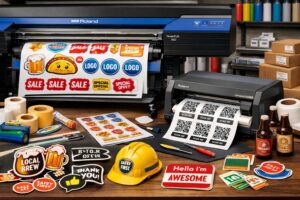
If you want consistent, repeatable orders that don’t require a sales miracle every month, start here. Stickers and decals are the easiest upsell in the world because every business uses them: packaging, promotions, equipment, windows, events, menus, QR codes, compliance labels—you name it.
Best Roland devices for stickers and decals
1) Roland TrueVIS VG3-540 / VG3-640 (eco-solvent printer/cutter)
This is the “I need one production machine that can do a ton” option. It’s designed for shops that want to print and contour cut in one workflow, which is huge for throughput and staffing.
Key specs (VG3 series):
-
Media width: up to 54″ (VG3-540) or 64″ (VG3-640)
-
Max print/cut width: approx. 52.9″ (540) and 62.9″ (640)
-
Max resolution: up to 1200 dpi
-
Ink delivery: 500 ml pouches (white often listed separately as smaller capacity)
Why it makes you money: you can sell higher-margin products (die-cut decals, branded sticker packs, window graphics) without sending anything out. Print/cut is also a big deal for agencies bringing production in-house because it reduces vendor delays and reprint risk.
2) Roland TrueVIS SG3-540 (eco-solvent printer/cutter, value-focused)
The SG3 line is popular when you want Roland print/cut reliability but you’re watching budget. It’s a great “first serious roll machine” or a “second device” to keep sticker and decal production moving while your primary machine handles wraps.
Key specs (typical SG3 category expectations):
-
Media width: up to 54″
-
Max print/cut width: approx. 52.9″
-
Built for standard sign vinyl and decal workflows
Why it makes you money: lower barrier to entry, still lets you sell a full sticker + decal menu, and helps keep turnaround times short (which is the easiest way to charge more).
3) Roland VersaSTUDIO BN2 series (desktop eco-solvent print/cut)
If you’re an agency, a small team, or a shop that wants a compact “sticker factory,” desktop print/cut is a sneaky revenue engine. It’s perfect for:
-
small decals
-
branded label runs
-
QR code stickers
-
internal prototyping
-
micro-orders with high profit per square foot
Typical BN2 lane strengths:
-
Smaller footprint
-
Print/cut in one device
-
Great for productized sticker offerings: “100 die-cut stickers,” “50 sheet labels,” etc.
What you should sell (high margin + repeatable)
-
Die-cut logo stickers for local brands
-
Kiss-cut sticker sheets for ecommerce packaging
-
QR code promo labels for restaurants and events
-
Hard-hat and equipment decals for trades and utilities
-
Window decals for retail promos
-
Limited-run label sets for seasonal products
Roland vs competitors in this lane
This is a crowded category, so here’s the practical breakdown:
-
Mimaki has strong print/cut options and is popular in shops that prioritize speed and color consistency across a fleet.
-
Epson eco-solvent models are often chosen when color gamut and photographic output are the core requirement.
-
Mutoh eco-solvent options are favored by some production teams for specific media handling and ink configurations.
Your reality check: most clients won’t pay more because you own Brand X. They pay more because you:
-
hit the deadline
-
match brand color consistently
-
deliver clean contour cuts
-
make reorders painless
Roland wins when you want that “smooth and predictable” production rhythm.
Revenue Stream #2: Wraps and fleet graphics (big invoices, recurring accounts)
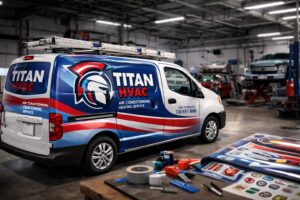
If you’re looking for high-ticket jobs that can turn into monthly work, fleet branding is one of the best plays in print. Wraps and vehicle graphics are sticky because once a business sees results from branded vehicles, they keep adding trucks, trailers, and equipment.
Best Roland devices for wraps and fleet
Roland TrueVIS VG3-640 (print/cut) for wrap kits and decals
The VG3-640 is popular for wrap-capable output plus integrated cutting for spot graphics and kits. If you sell:
-
partial wraps
-
cut vinyl decals
-
window perforated graphics
-
trailer and box truck graphics
…a 64″ class machine makes your life easier.
Roland TrueVIS XP-640 (print-only) for throughput
Print-only becomes attractive when:
-
you’re producing wraps daily
-
you laminate everything
-
your cutter is already dialed in
-
your bottleneck is print speed, not finishing
Key specs (XP-640 category highlights):
-
64″ class
-
Often configured in expanded ink sets to improve color and brand matching
Why it makes you money: more throughput = more wrap jobs per week = better equipment utilization. Print-only is also simpler operationally when you’re running a high-volume environment.
What you should sell (wrap shop menu that prints money)
-
Fleet starter packages: “2 vans + 1 trailer” pricing
-
Contractor growth kits: vehicle graphics + jobsite signs + equipment labels
-
Real estate: sign panels + riders + window graphics
-
Franchise refresh: storefront graphics + interior wall décor + directional signage
Roland vs competitors for wraps
-
HP Latex is a major wrap contender, often chosen for indoor-friendlier output and certain production preferences.
-
Epson is often chosen where brand color and fine photographic gradients are the core selling point.
-
Mimaki competes strongly in print/cut and production eco-solvent lanes.
The smart play: if wraps are your focus, don’t obsess over which brand has the highest top speed on paper. Focus on which system your team can run cleanly every day, with fewer head-scratching issues. Wrap margins vanish fast when you’re reprinting panels.
Revenue Stream #3: UV print (the “premium upsell” lane you can’t unsee)

UV is where many shops go from “competing on square footage” to “selling specialty products clients can’t get from an online print farm.”
UV unlocks:
-
printing on rigid materials
-
printing on objects
-
white ink
-
gloss/spot effects
-
layered textures (depending on model and workflow)
This is how you sell premium signage, branded gifts, packaging mockups, awards, and ADA-style products.
Best Roland devices for UV revenue
1) Roland VersaUV LEC2 series (UV printer/cutter)
If you want UV benefits in a roll workflow—and you still want contour cutting—this category is your bridge from eco-solvent decals to premium UV decals.
Typical LEC2 value points:
-
UV inks with specialty options (like white and gloss)
-
Print/cut workflow for premium decals, labels, and short-run specialty graphics
-
Great for clear media + white underbase effects
2) Roland VersaUV LEF2 series (benchtop UV flatbed)
This is the “print shop Swiss army knife” category. It’s popular for:
-
acrylic pieces
-
leather patches
-
small signage
-
awards plates
-
packaging prototypes
-
personalized promo items
Key specs (LEF2-300 lane highlights):
-
Benchtop footprint
-
Prints on objects up to several inches thick (common in this class)
-
High-detail output for premium items
3) Roland VersaOBJECT MO series (more object height, more production capability)
When you outgrow benchtop UV, you move into a platform built for heavier production and bigger objects.
Why this makes you money: object printing is one of the few print categories where clients accept higher pricing without blinking because it feels “custom” and “premium.”
What you should sell with UV (high margin product ideas)
-
Branded drinkware and promo items (when compatible with flat printing + jigs)
-
ADA-style signage and wayfinding (with layered/raised effects when supported)
-
Acrylic lobby signs
-
Desk nameplates
-
Short-run packaging mockups for product launches
-
Specialty labels (white + gloss effects)
UV competitors (and when they win)
-
Mimaki UJF series is a major competitor in benchtop UV.
-
Mutoh desktop UV options exist for shops that want a compact UV footprint.
-
Other UV flatbed manufacturers compete heavily once you go into larger rigid-flatbed territory.
Roland’s advantage for a lot of teams: approachable operation and a workflow that feels like an extension of what you already do (design → RIP → output), rather than a whole new manufacturing discipline.
Revenue Stream #4: DTF apparel (turn your client list into a merch machine)

If you already serve local businesses, schools, events, or creators, then you already have customers who want merch. The only question is whether you want to capture that spend or let it go to someone else.
DTF is one of the fastest-growing categories because it’s flexible:
-
cotton, poly blends, more garment variety
-
vibrant prints
-
short runs
-
personalization
Best Roland device for apparel
Roland TY-300 (DTF printer)
The TY-300 is built to help you run apparel production as a system rather than a hobby. DTF is not just “buy printer, print shirts.” It’s printer + powder + curing workflow. Roland’s ecosystem approach helps keep results consistent, which is where profit lives.
Why it makes you money: you can sell:
-
employee apparel programs
-
event merch
-
limited drops
-
subscription-style monthly merch for brands
DTF competitors (quick reality check)
-
Epson has dedicated DTFilm devices that are popular for certain production environments.
-
Mimaki offers DTF options that appeal to shops already running Mimaki ecosystems.
-
Many other DTF brands exist, but consistency and support matter a lot in apparel because misprints and returns are expensive.
Your takeaway: if you want an add-on revenue lane with huge cross-sell potential, DTF is it—especially if your agency clients already ask you for “shirts for the team” or “swag for the launch.”
Revenue Stream #5: Wall graphics and indoor décor (resin/latex-style opportunities)

Interior branding is exploding: offices, retail, gyms, schools, healthcare facilities—they all want branded environments. Wall wraps, window graphics, and indoor signage can be extremely profitable because it’s tied to remodels, expansions, and rebrands.
Best Roland device for this lane
Roland TrueVIS AP-640 (resin)
Resin-style printing can be attractive when you want:
-
indoor-friendly output characteristics
-
strong scratch resistance characteristics (depending on media/lamination)
-
wall graphic production at scale
Why it makes you money: indoor décor jobs are often bundled:
-
wall murals
-
window treatments
-
directional signage
-
branded conference rooms
-
multi-location rollouts
Competing devices for indoor graphics
-
HP Latex is often the mainstream competitor in this “wall graphics and interiors” conversation.
-
Other resin/latex-style systems exist depending on your region and dealer network.
Your takeaway: if you want bigger project revenue (not just transactional print orders), interiors are one of the best lanes—and Roland’s platforms are a way in.
The real unlock: productize offers so clients buy more without thinking
New revenue streams don’t work if you treat them as “custom quotes every time.” The magic is turning them into simple packages your clients understand.
Here are proven bundles that sell well:
Bundle A: The “Brand Launch Kit” (perfect for marketing agencies)
-
Window graphics
-
Wall logo or wall mural
-
QR code sticker packs for campaigns
-
A small swag run (UV printed items)
-
A merch drop (DTF tees or hoodies)
You’re not selling prints—you’re selling a launch experience.
Bundle B: The “Contractor Growth Kit”
-
Fleet decals (2 vehicles)
-
Trailer graphics (1 trailer)
-
Jobsite signs (6–12)
-
Equipment labels (sheet sets)
-
Hard-hat sticker packs (for crews)
This is a recurring customer type. Contractors grow. When they grow, they order again.
Bundle C: The “Event Pop-Up Package”
-
Step-and-repeat backdrop
-
Sponsor wall decals and wayfinding
-
VIP wristbands / badges
-
Photo props (UV acrylic)
-
Merch table items (DTF)
Events are deadline-driven, which means clients value reliability and are less price-sensitive.
Bundle D: “Ecommerce Packaging Starter”
-
Product label set (short-run)
-
Thank-you stickers and seals
-
Branded insert cards (if you offer them)
-
QR code stickers for review campaigns
If you serve local brands, this bundle creates recurring packaging orders.
Which Roland device should you start with? (simple decision guide)
If you want a practical “buy this first” map:
If you want the most versatile “core” device:
TrueVIS VG3-540 or VG3-640
-
Best if you sell a mix of decals, signs, and wrap-related work
-
Print/cut means fewer steps and fewer handoffs
If you’re starting print/cut and want value:
TrueVIS SG3-540
-
Great for building a sticker + signage business without overspending early
If you’re an agency or small shop that wants a compact sticker engine:
VersaSTUDIO BN2 series
-
Ideal for short-run sticker programs and fast in-house control
If you want the biggest “high-margin specialty” leap:
VersaUV LEF2 (benchtop UV)
-
Lets you sell premium personalized items and rigid signage
-
Fantastic for agencies building campaign kits
If you want to own apparel revenue fast:
TY-300 DTF
-
Converts your existing customer list into a merch revenue stream
If you want indoor décor and wall graphics:
AP-640 resin
-
For offices, schools, healthcare, retail interior branding
SEO keywords you’ll naturally hit with this strategy
If you’re publishing on WordPress and want to capture organic search, this topic tends to rank around phrases like:
-
Roland printer for print shop revenue
-
Roland TrueVIS VG3 vs competitors
-
UV printer for promotional products
-
Benchtop UV printer for marketing agency
-
DTF printer for custom apparel business
-
eco-solvent printer cutter for stickers and decals
-
print shop new revenue streams
-
how to grow a sign shop business
Tip: Use these in headings, image alt tags, and meta descriptions—don’t stuff them in paragraphs.
Start with A Risk Free Demo Today
If you want to grow revenue without gambling on a single product category, Roland is one of the most practical ways to build a stacked service menu: start with a core print/cut device for decals and signs, then add one high-margin lane like UV specialty products or DTF apparel. The fastest wins usually come from selling bundles to clients you already have—not chasing brand-new customers. If you tell me your top three current products, your average monthly print volume, and whether you lean more “print shop” or “agency,” I’ll lay out a Roland-based lineup (plus the closest HP/Epson/Mimaki/Mutoh alternatives) and a simple first-month offer list you can start pitching immediately.